All therapiesEvidence snapshot 2026-09-13
Weight & glucose

Aleniglipron

An oral small molecule that activates GLP-1 receptors.

At a glance

Selected evidence in this atlas
Studied use & population

Adults with obesity or overweight and comorbidity without diabetes

Study context
Approval & development

Investigational; first patients dosed in phase 3 ACCOMPLISH-1 and ACCOMPLISH-2 by August 6, 2026.

Status source · 2026-09-13Status & indications
Selected efficacy evidence

11.4% reported weight loss · 1% loss with placebo · 36 weeks

ACCESS · Phase 2b · peer-reviewed · 120 mg once daily · Regardless of stopping treatment

Evidence & limitations
Important safety context

GI events predominate; 10.4% AE-related treatment discontinuation across active arms; no drug-induced liver injury observed.

Safety context
Next milestone

A next milestone is not summarized for this therapy.

Milestone details

Study results apply to their own population, dose and analysis. They do not establish a ranking between therapies.

Evidence in the atlas

2 results

Each result belongs to its own study population, dose and analysis. Open a result for its chart, comparator, safety findings and limitations.

Weight loss

ACCESS

11.4% reported weight loss · 1% loss with placebo · 36 weeks

120 mg once daily

Adults with obesity or overweight and comorbidity without diabetes

Treatment-regimen estimand includes post-intercurrent-event data regardless of adherence. Missing data imputation assumes accrued benefit is retained with no further benefit after an event. Extended Data Table 2 independently verifies 11.4% active versus 1.0% placebo. Investigational; first patients dosed in phase 3 ACCOMPLISH-1 and ACCOMPLISH-2 by August 6, 2026.

Safety context

GI events predominate; 10.4% AE-related treatment discontinuation across active arms; no drug-induced liver injury observed.

Limitations: 120 mg efficacy result has a source conflict: the June 24 publisher correction changes Figure 3b from 12.1% to 12.7%, while current article text, Figure 3a source data, and downloadable XLSX still show 12.1%. The treatment-regimen 11.4% result in Extended Data Table 2 is unaffected. Do not substitute the conflicting efficacy figure.

Glucose control

GSBR-1290 phase 2a diabetes cohort

0.84 percentage-point HbA1c decrease · 0.18 pp increase with Placebo · 12 weeks

90 mg daily after escalation

Adults with type 2 diabetes

Least-squares mean change from a mixed model for repeated measures.

Safety context

At 90 mg, 96.2% reported an adverse event versus 44.4% with placebo. Nausea/vomiting predominated; no treatment-related serious events. One of 36 treated diabetes participants stopped due to a drug-related event.

Limitations: Small early cohort. The headline 1.02 pp figure is placebo-adjusted; the active-arm decrease was 0.84 pp.

Biology & identity

Status in this atlas: Investigational; first patients dosed in phase 3 ACCOMPLISH-1 and ACCOMPLISH-2 by August 6, 2026. Status source

Hormone activity

An oral small molecule that activates GLP-1 receptors.

Investigational; no approved trade name identified as of 2026-09-13. The compound name and development codes are not approved brands.

Structure Therapeutics · Developer and clinical-trial sponsor; compound previously designated GSBR-1290.

Uses, doses and availability depend on the formulation, indication and country. Study doses below describe research; they are not prescribing instructions.

The molecule

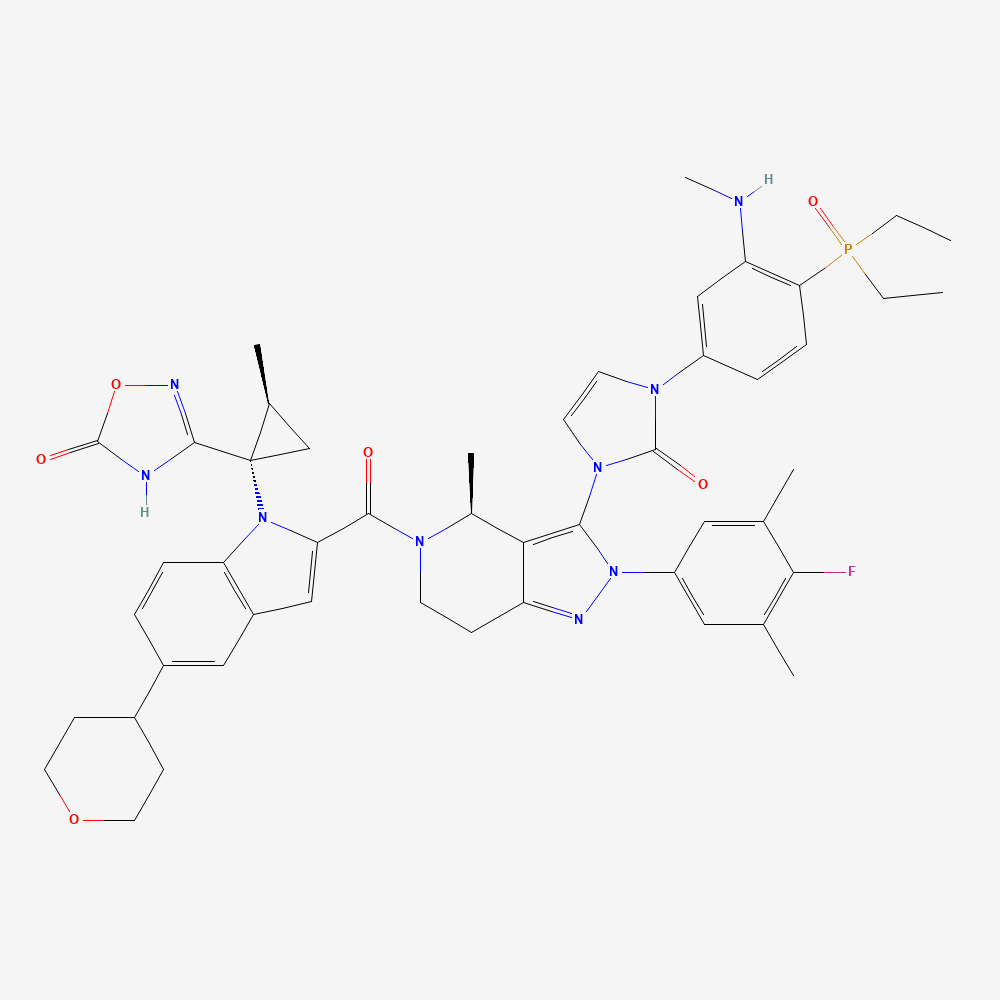
2D chemical structure

Aleniglipron · 2D chemical structure

Chemical connectivity and stereochemistry of Aleniglipron.

Shown: Active compound as represented in the named PubChem record; formulation excipients excluded.

A two-dimensional chemical diagram shows bonds and stereochemistry, not a measured three-dimensional shape.

PubChem, National Library of Medicine

PubChem CID 164809721

Development timeline

Next milestone

A next milestone is not summarized for this therapy. This does not mean development has ended.

Development history4 selected milestones

Aleniglipron · compound history across indications

Selected milestones only. Earlier studies may be missing; the first listed date should not be interpreted as the start of development.

  1. Phase 2a obesity results

    Structure reported 12-week phase 2a results and capsule-to-tablet pharmacokinetic data under the GSBR-1290 code.

    Source
  2. ACCESS published

    The randomized 36-week phase 2b ACCESS trial was published in Nature Medicine.

    Source
  3. Phase 3 dosing confirmed

    Structure reported that the first patients had been dosed in ACCOMPLISH-1 and ACCOMPLISH-2 for chronic weight management.

    Source
  4. 72-week extension results

    Structure reported ACCESS open-label extension results. This extension involved continuing participants and placebo crossover, not a new parallel placebo-controlled comparison.
    Source

Selected sources checked Sep 13, 2026. This is not an exhaustive history.