All therapiesEvidence snapshot 2026-09-14
Lipids & cardiovascular health

Atorvastatin

Inhibits HMG-CoA reductase, an enzyme in cholesterol synthesis. Source

At a glance

Selected evidence in this atlas
Studied use & population

Community-dwelling Australian adults aged at least 70, without cardiovascular disease, diabetes, or dementia.

Study context
Approval & development

Selected approval record (1996-12-17): FDA approved atorvastatin as Lipitor. Its later prevention trials addressed clinical events beyond the original lipid-lowering evidence.

Status sourceStatus & indications
Selected efficacy evidence

Major cardiovascular events: HR 0.7 (95% CI 0.61–0.82). Cardiovascular death, nonfatal heart attack or stroke, or coronary revascularization.

STAREE · 40 mg orally daily · Atorvastatin versus placebo, alongside usual general-practice care. · Median randomized follow-up: 5.9 years.

Evidence & limitations
Important safety context

Reported serious adverse events: 2.7% in both groups. Musculoskeletal, hepatobiliary, and diabetes-related events were more frequent with atorvastatin.

Safety context
Next milestone

A next milestone is not summarized for this therapy.

Milestone details

Study results apply to their own population, dose and analysis. They do not establish a ranking between therapies.

Evidence in the atlas

2 results

Each result belongs to its own study population, dose and analysis. Open a result for its chart, comparator, safety findings and limitations.

Lipid lowering

Pooled dose-response trials

LDL-C: 60% reduction within arm · 6 weeks

80 mg daily

Adults with primary hyperlipidemia

Adjusted mean change from baseline; two trials pooled.

Safety context

Label risks: muscle injury, liver enzyme elevations and increased glucose.

Limitations: Small displayed arm. Baseline concentrations and total trial N are not supplied for this table; no placebo-adjusted estimate is reported.

Cardiovascular outcomes

STAREE

Major cardiovascular events: HR 0.7 (95% CI 0.61–0.82). Cardiovascular death, nonfatal heart attack or stroke, or coronary revascularization.

40 mg orally daily

Community-dwelling Australian adults aged at least 70, without cardiovascular disease, diabetes, or dementia.

Background treatment & comparator: Atorvastatin versus placebo, alongside usual general-practice care.

Median randomized follow-up: 5.9 years. The primary abstract reports 10.9 versus 15.5 events per 1,000 person-years; these are not cumulative percentages.

Safety context

Reported serious adverse events: 2.7% in both groups. Musculoskeletal, hepatobiliary, and diabetes-related events were more frequent with atorvastatin.

Limitations: The other co-primary outcome, disability-free survival, was not significantly improved (HR 0.94; 95% CI 0.84–1.05). Separate mortality HRs were not verified in the available primary abstract.

Biology & identity

Status in this atlas: Selected approval record (1996-12-17): FDA approved atorvastatin as Lipitor. Its later prevention trials addressed clinical events beyond the original lipid-lowering evidence. Status source

Inhibits HMG-CoA reductase, an enzyme in cholesterol synthesis.

Mechanism source

Uses, doses and availability depend on the formulation, indication and country. Study doses below describe research; they are not prescribing instructions.

The molecule

Small molecule

Atorvastatin

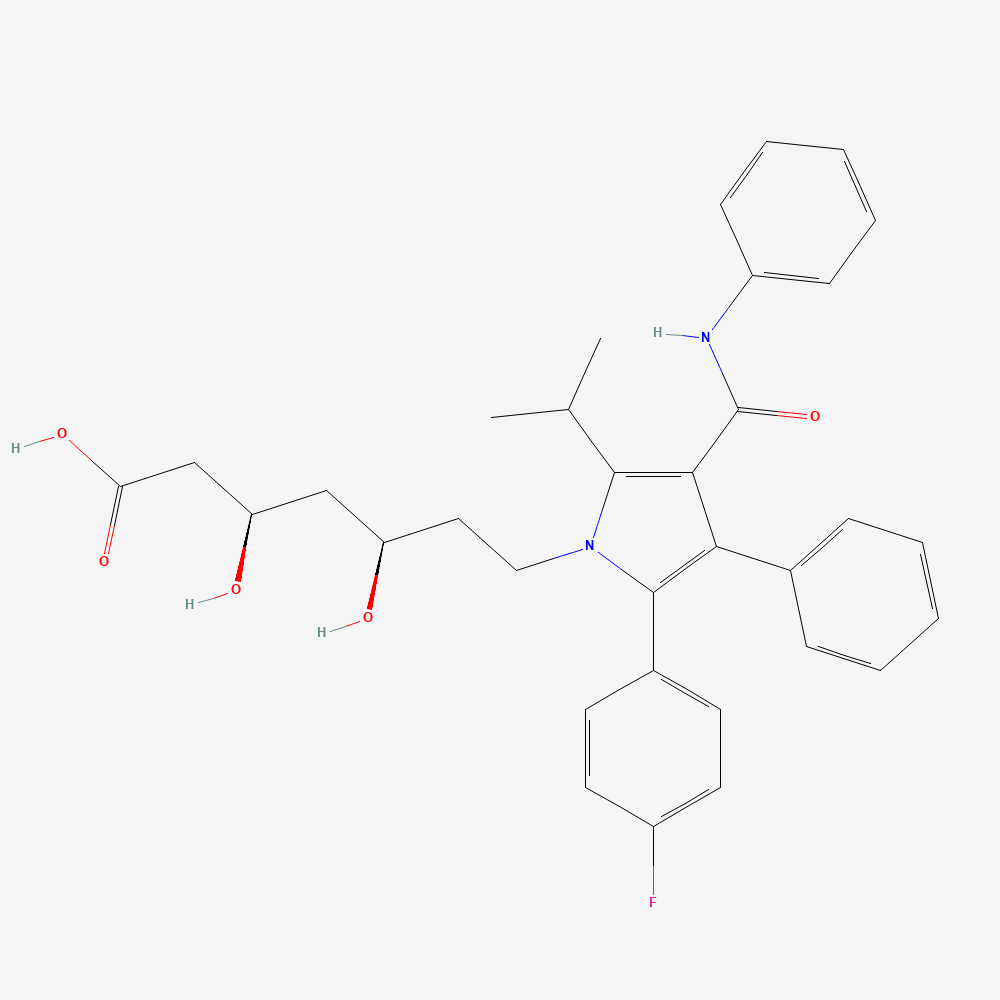
Chemical structure of the atorvastatin parent molecule.

Shown: Atorvastatin free acid; the calcium counterion and waters of hydration are omitted.

Lipitor contains atorvastatin calcium. This drawing identifies the parent active moiety rather than the full salt crystal. The optional 3D view is a computed PubChem conformer, not an experimentally measured or protein-bound shape.

PubChem CID 60823

Development timeline

Next milestone

A next milestone is not summarized for this therapy. This does not mean development has ended.

Development history5 selected milestones

Atorvastatin · compound history across indications

Selected sourced milestones, not a complete development history. Dates distinguish study starts, publications, announcements and approvals; the first listed date is not necessarily when development began.

  1. Publication

    Early dose-ranging trial published

    A six-week randomized study tested atorvastatin in 81 people with primary hypercholesterolemia, demonstrating dose-dependent LDL-C lowering before approval.

    Nawrocki et al. — early atorvastatin trial
  2. Publication

    Single-dose human study published

    A study in 22 healthy volunteers characterized tolerability and pharmacokinetics of investigational atorvastatin. This date is the publication, not the start of human testing.

    Posvar et al. — clinical pharmacology
  3. Approval

    Lipitor receives first U.S. approval

    FDA approved atorvastatin as Lipitor. Its later prevention trials addressed clinical events beyond the original lipid-lowering evidence.

    FDA — original Lipitor approval letter
  4. Publication

    ASCOT-LLA prevention results published

    Atorvastatin reduced coronary events in hypertensive adults with additional risk factors in this primary-prevention trial.

    ASCOT-LLA — Lancet
  5. Publication

    STAREE results published

    The trial in adults aged 70 or older without cardiovascular disease, diabetes or dementia reported fewer major cardiovascular events. Disability-free survival was not significantly improved. The cardiovascular estimate is plotted here.
    STAREE — NEJM

Selected sources checked Sep 14, 2026. This is not an exhaustive history.