All therapiesEvidence snapshot 2026-09-13
Weight & glucose

Beinaglutide

Activates GLP-1 receptors. Its amino-acid sequence matches human GLP-1 (7–36).

At a glance

Selected evidence in this atlas
Studied use & population

Chinese adults with overweight or obesity without diabetes

Study context
Approval & development

Approved in China for adult weight management under Feisumei since July 2023; also marketed for adult type 2 diabetes under Yishengtai.

Status sourceStatus & indications
Selected efficacy evidence

6% reported weight loss · 2.4% loss with placebo · 16 weeks

China phase 3 weight-management trial · Phase 3 · peer-reviewed · 0.2 mg three times daily · Other / incompletely specified

Evidence & limitations
Important safety context

Nausea 49.3%; adverse-event discontinuations 5.9% vs 0.7% placebo.

Safety context
Next milestone

A next milestone is not summarized for this therapy.

Milestone details

Study results apply to their own population, dose and analysis. They do not establish a ranking between therapies.

Evidence in the atlas

1 result

Each result belongs to its own study population, dose and analysis. Open a result for its chart, comparator, safety findings and limitations.

Weight loss

China phase 3 weight-management trial

6% reported weight loss · 2.4% loss with placebo · 16 weeks

0.2 mg three times daily

Chinese adults with overweight or obesity without diabetes

Primary MMRM using model-predicted missing values; FAS 420. Approved in China for adult weight management under Feisumei since July 2023; also marketed for adult type 2 diabetes under Yishengtai.

Safety context

Nausea 49.3%; adverse-event discontinuations 5.9% vs 0.7% placebo.

Limitations: 16-week trial; 427 randomized, 420 analyzed; benaglutide is a spelling variant, not a separate asset.

Biology & identity

Status in this atlas: Approved in China for adult weight management under Feisumei since July 2023; also marketed for adult type 2 diabetes under Yishengtai. Status source

Hormone activity

Activates GLP-1 receptors. Its amino-acid sequence matches human GLP-1 (7–36).

Feisumei (菲塑美)
Chinese injectable brand for overweight/obesity and weight management. · injection
Yishengtai (谊生泰)
Chinese injectable brand for adult type 2 diabetes, including inadequate control with metformin alone. · injection

Shanghai Benemae Pharmaceutical · Originator, manufacturer and commercial developer of the Chinese products.

Uses, doses and availability depend on the formulation, indication and country. Study doses below describe research; they are not prescribing instructions.

The molecule

Peptide structure

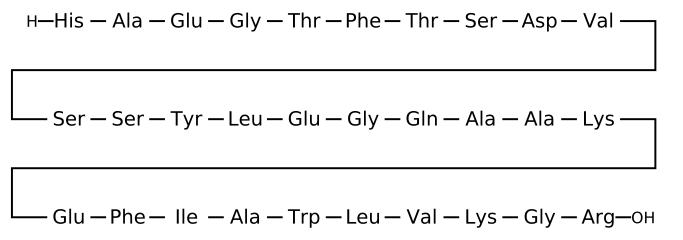
Beinaglutide · peptide sequence diagram

Source-provided sequence and chemical modification diagram of Beinaglutide.

Shown: Active peptide; formulation excluded.

A two-dimensional sequence diagram, not a three-dimensional conformation. Amino-acid abbreviations stand for residues; connecting lines represent peptide connectivity. This drug’s 30-residue sequence is human GLP-1(7–36), with the terminal form drawn as represented in the drug record.
PubChem (NextMove Sugar-n-Splice depiction)

PubChem CID 16209124

Development timeline

Next milestone

A next milestone is not summarized for this therapy. This does not mean development has ended.

Development history3 selected milestones

Beinaglutide · compound history across indications

Selected milestones only. Earlier studies may be missing; the first listed date should not be interpreted as the start of development.

  1. Chinese diabetes approval

    Beinaglutide injection was approved for adult type 2 diabetes; the company identifies Yishengtai as the diabetes brand.

    Source
  2. Weight-management registration announced

    Benemae announced receipt of the registration certificate for the weight-management indication.

    Source
  3. Phase 3 weight-management study published

    The randomized 16-week study in Chinese adults without diabetes was first published online; the journal issue followed in February 2024.

    Source

Selected sources checked Sep 13, 2026. This is not an exhaustive history.