Selected approval record (2024-03-22): FDA expanded the Nexletol label following CLEAR Outcomes, adding cardiovascular-risk reduction and broadening LDL-C lowering. The cardiovascular indication covers adults unable to take recommended statin therapy who have established cardiovascular disease or high cardiovascular risk.
LDL-C: 18 percentage-point reduction vs placebo · 12 weeks
180 mg daily
Adults with ASCVD and/or HeFH; 95% had established CVD
ANCOVA with adherence-sensitive multiple imputation; exploratory TG uses median change.
Safety context
Label risks include hyperuricemia/gout and tendon rupture.
Limitations: Added to existing therapy; HDL and TG were exploratory and outside the testing hierarchy. Rounded arm changes need not reproduce the modeled treatment difference.
Four-point cardiovascular composite: HR 0.87 (95% CI 0.79–0.96). Cardiovascular death, nonfatal heart attack, nonfatal stroke, or coronary revascularization.
180 mg orally daily
Statin-intolerant adults with cardiovascular disease or high cardiovascular risk and LDL-C at least 100 mg/dL.
Background treatment & comparator: Very-low-dose statins and other lipid drugs permitted; bempedoic acid versus placebo.
Median randomized follow-up: 40.6 months (3.38 years). Crude proportion with an event during randomized follow-up; median randomized follow-up: 40.6 months (3.38 years).
Safety context
Gout: 3.1% versus 2.1%; gallstones: 2.2% versus 1.2%. Hepatic-enzyme elevations and renal adverse events were more frequent.
Limitations: Population was statin-intolerant; findings do not directly compare bempedoic acid with a statin. Mortality did not improve; testing hierarchy stopped at the nonsignificant stroke endpoint.
Status in this atlas: Selected approval record (2024-03-22): FDA expanded the Nexletol label following CLEAR Outcomes, adding cardiovascular-risk reduction and broadening LDL-C lowering. The cardiovascular indication covers adults unable to take recommended statin therapy who have established cardiovascular disease or high cardiovascular risk. Status source
After activation to a CoA derivative, inhibits ATP-citrate lyase in the liver, reducing cholesterol synthesis.
Uses, doses and availability depend on the formulation, indication and country. Study doses below describe research; they are not prescribing instructions.
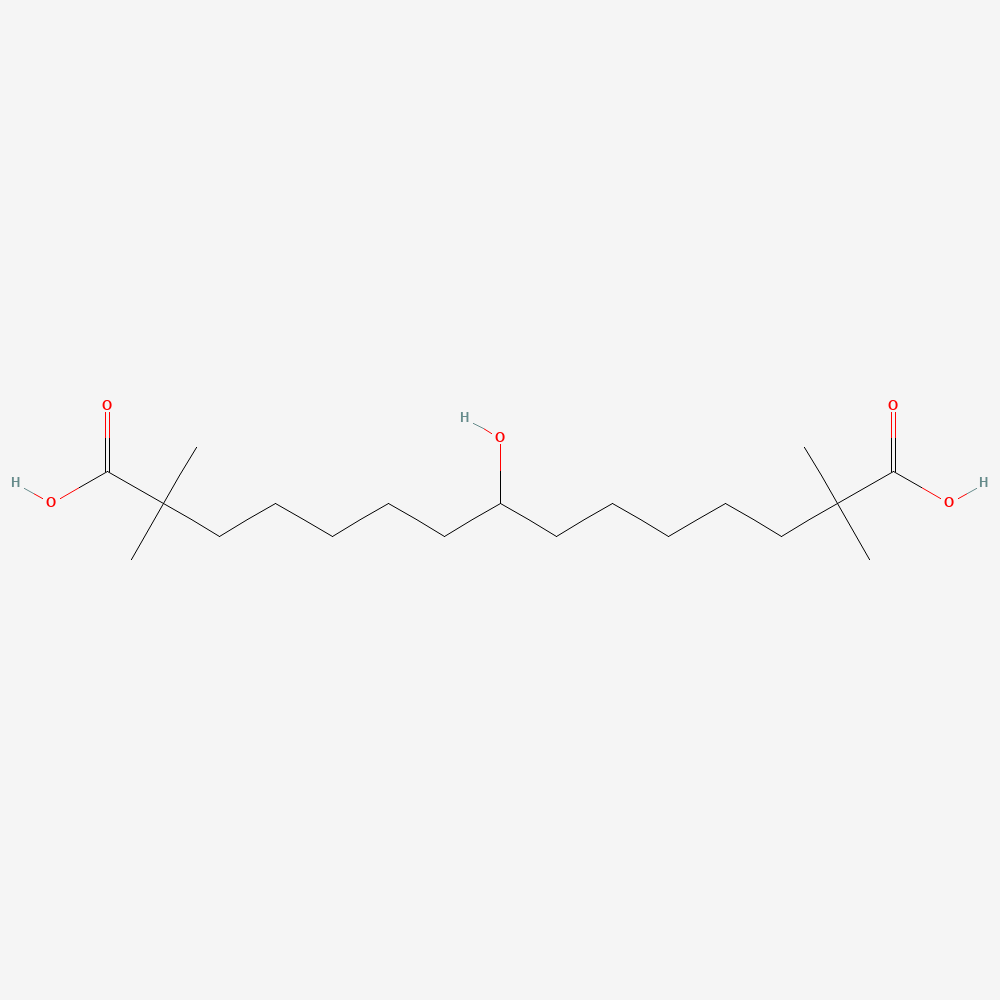
The parent drug is shown, not the intracellular CoA-activated derivative. The optional 3D view is a computed PubChem conformer, not an experimentally measured or protein-bound shape.
A next milestone is not summarized for this therapy. This does not mean development has ended.
Development history5 selected milestones
Bempedoic acid · compound history across indications
Selected sourced milestones, not a complete development history. Dates distinguish study starts, publications, announcements and approvals; the first listed date is not necessarily when development began.
Publication
Phase 2 proof of LDL lowering published
A 177-participant randomized trial of ETC-1002, later named bempedoic acid, reported dose-dependent LDL-C lowering over 12 weeks. This was early human efficacy evidence, before the CLEAR phase 3 program.
The 52-week phase 3 study evaluated bempedoic acid added to background lipid therapy. It demonstrated LDL-C lowering and supplied longer-term safety evidence for the initial approval; it was not a dedicated cardiovascular outcomes trial.
FDA approved bempedoic acid for additional LDL-C lowering in adults with heterozygous familial hypercholesterolemia or established atherosclerotic cardiovascular disease, alongside diet and maximally tolerated statin therapy. Cardiovascular morbidity and mortality effects were undetermined at approval.
Among 13,970 statin-intolerant patients with cardiovascular disease or high risk, bempedoic acid reduced the four-component primary cardiovascular outcome (HR 0.87; 95% CI 0.79–0.96). Cardiovascular and all-cause mortality were not significantly reduced.
FDA expanded the Nexletol label following CLEAR Outcomes, adding cardiovascular-risk reduction and broadening LDL-C lowering. The cardiovascular indication covers adults unable to take recommended statin therapy who have established cardiovascular disease or high cardiovascular risk.