All therapiesEvidence snapshot 2026-09-13
Weight & glucose

CT-996

An oral small molecule that activates GLP-1 receptors.

At a glance

Selected evidence in this atlas
Studied use & population

Adults with obesity without type 2 diabetes; early-phase dose-escalation cohort

Study context
Approval & development

Investigational; phase 2 obesity trials ongoing, with data expected H2 2026 in the June 8 sponsor update.

Status source · 2026-09-13Status & indications
Selected efficacy evidence

7.3% reported weight loss · 1.2% loss with placebo · 4 weeks

CT-996 multipart phase 1 · Phase 1 · sponsor · Once daily; target dose not specified in source · Other / incompletely specified

Evidence & limitations
Important safety context

Predominantly mild/moderate GI events; no treatment discontinuation in the reported cohort.

Safety context
Next milestone

A next milestone is not summarized for this therapy.

Milestone details

Study results apply to their own population, dose and analysis. They do not establish a ranking between therapies.

Evidence in the atlas

1 result

Each result belongs to its own study population, dose and analysis. Open a result for its chart, comparator, safety findings and limitations.

Weight loss

CT-996 multipart phase 1

7.3% reported weight loss · 1.2% loss with placebo · 4 weeks

Once daily; target dose not specified in source

Adults with obesity without type 2 diabetes; early-phase dose-escalation cohort

Sponsor-reported cohort mean; formal estimand not specified. Investigational; phase 2 obesity trials ongoing, with data expected H2 2026 in the June 8 sponsor update.

Safety context

Predominantly mild/moderate GI events; no treatment discontinuation in the reported cohort.

Limitations: Four-week early-phase proof of concept; not a long-term randomized obesity efficacy trial.

Biology & identity

Status in this atlas: Investigational; phase 2 obesity trials ongoing, with data expected H2 2026 in the June 8 sponsor update. Status source

Hormone activity

An oral small molecule that activates GLP-1 receptors.

Investigational; no approved trade name identified as of 2026-09-13. CT-996 remains a development code.

Roche · Current owner/developer following acquisition of Carmot.; Carmot Therapeutics · Originator of CT-996; acquired into Roche's Pharmaceuticals Division.

Uses, doses and availability depend on the formulation, indication and country. Study doses below describe research; they are not prescribing instructions.

The molecule

2D chemical structure

CT-996 (tifeglipron) · 2D chemical structure

Chemical connectivity and stereochemistry of Tifeglipron.

Shown: Active compound as represented in the named PubChem record; formulation excipients excluded.

A two-dimensional chemical diagram shows bonds and stereochemistry, not a measured three-dimensional shape. PubChem lists CT-996 as a synonym of tifeglipron; the alias was verified in the downloaded synonyms record.
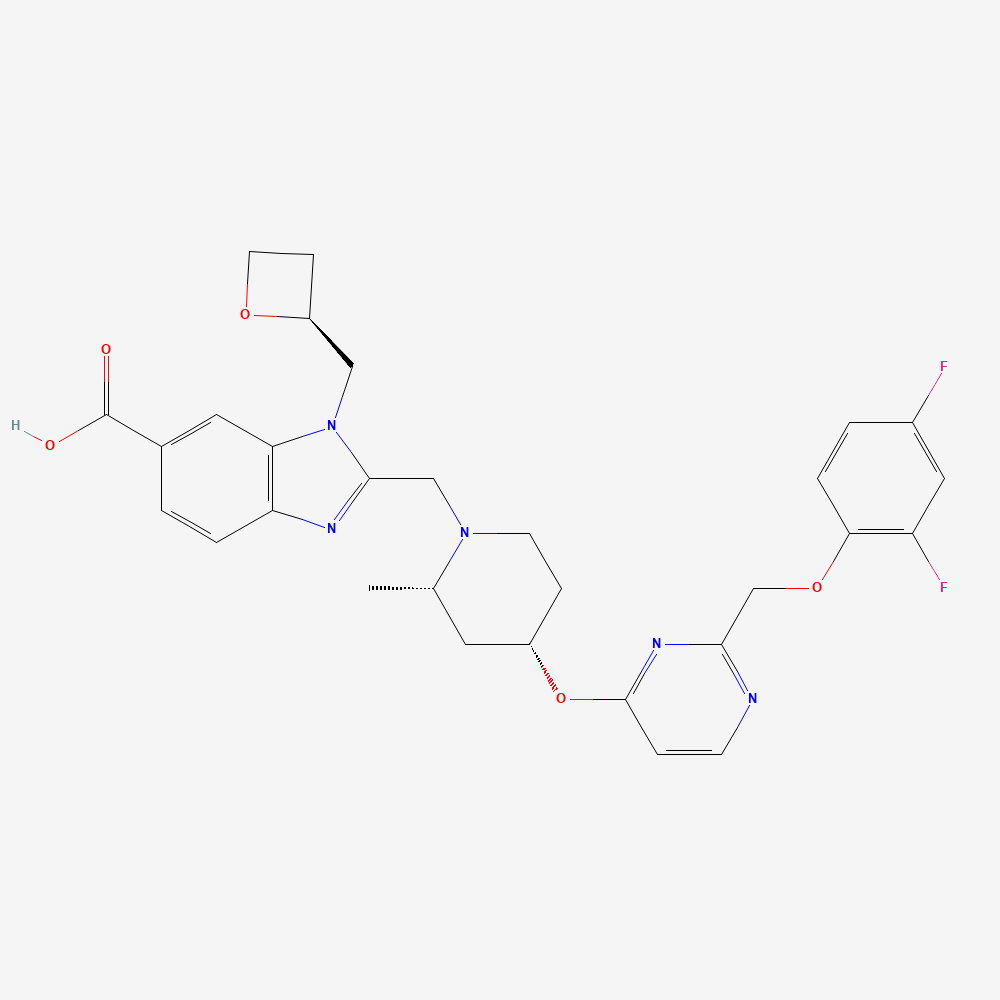
PubChem, National Library of Medicine

PubChem CID 167417114

Development timeline

Next milestone

A next milestone is not summarized for this therapy. This does not mean development has ended.

Development history3 selected milestones

CT-996 · compound history across indications

Selected milestones only. Earlier studies may be missing; the first listed date should not be interpreted as the start of development.

  1. Roche acquisition completion announced

    Carmot announced that Roche had completed the acquisition including CT-996, then in phase 1.

    Source
  2. Initial obesity results

    Roche reported four-week phase 1 proof-of-concept results in adults with obesity without type 2 diabetes.

    Source
  3. Phase 2 program confirmed ongoing

    Roche's ADA update identified ongoing obesity trials with and without type 2 diabetes. This was a status update, not a phase 2 efficacy readout.

    Source

Selected sources checked Sep 13, 2026. This is not an exhaustive history.