LDL-C: 55.8 percentage-point reduction vs placebo · 24 weeks
20 mg once daily
Hypercholesterolemia with established ASCVD or increased cardiovascular risk
Prespecified placebo-adjusted analysis; a separate post-hoc analysis removed biologically impossible LDL values.
Safety context
Adverse events, serious events and discontinuations were comparable with placebo.
Limitations: Prespecified LDL reduction is 55.8%; the separately reported post-hoc result is 59.7%. Biomarker approval does not establish clinical-event benefit.
Status in this atlas: FDA-approved for LDL lowering in adults with hypercholesterolemia, including HeFH; cardiovascular outcomes are under study. Status source
Binds PCSK9 and inhibits its interaction with the LDL receptor.
Uses, doses and availability depend on the formulation, indication and country. Study doses below describe research; they are not prescribing instructions.
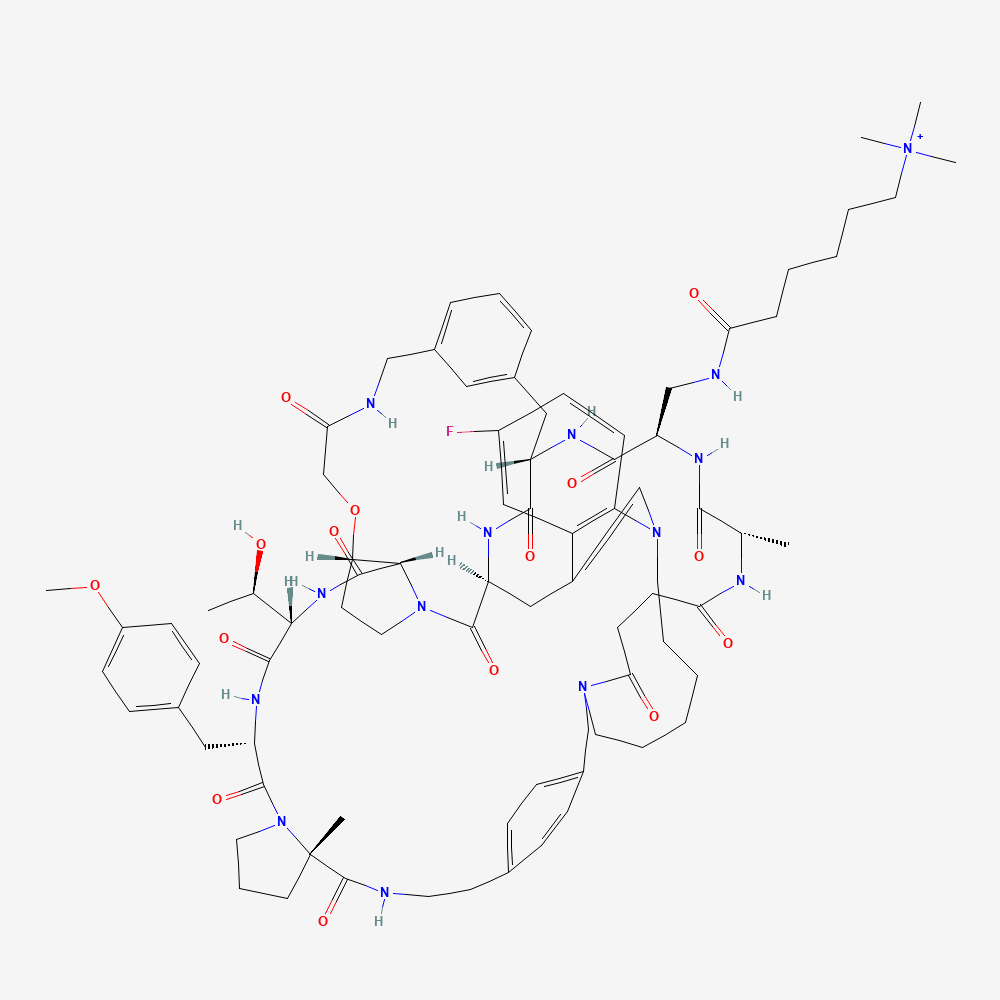
The enlicitide decanoate salt has a separate PubChem record (CID 172866837); this drawing shows its parent enlicitide moiety. No matching PubChem 3D conformer was available for this record when checked.
A next milestone is not summarized for this therapy. This does not mean development has ended.
Development history5 selected milestones
Enlicitide · compound history across indications
Selected sourced milestones, not a complete development history. Dates distinguish study starts, publications, announcements and approvals; the first listed date is not necessarily when development began.
Announcement
First phase 1 results presented
Early single-dose and multiple-dose MK-0616 studies were presented at the American Heart Association meeting. They supplied initial human evidence that an oral macrocyclic peptide could inhibit PCSK9 and lower LDL-C.
The randomized trial found significant LDL-C reductions across four MK-0616 doses over eight weeks, providing dose-ranging evidence for the subsequent CORALreef phase 3 program.
The peer-reviewed report described macrocyclic-peptide discovery and early human pharmacology. Its publication followed the 2021 presentation and should not be mistaken for the start of human development.
The sponsor presented the pivotal trial's prespecified placebo-adjusted LDL-C reduction of 55.8% at week 24. This is the lipid-response study plotted here; the separate post-hoc 59.7% estimate is a different analysis.
FDA approved enlicitide tablets as an adjunct to diet and exercise to reduce LDL-C in adults with hypercholesterolemia, including HeFH. The date is the July 15 electronic signature on the original FDA approval letter.