Provides EPA after de-esterification. Proposed triglyceride effects include reduced liver VLDL-triglyceride production and increased clearance; the mechanisms of cardiovascular-event reduction are not fully understood. Source
Selected approval record (2019-12-13): Following REDUCE-IT, FDA approved use with maximally tolerated statins to reduce specified cardiovascular events in adults with triglycerides at least 150 mg/dL and established cardiovascular disease, or diabetes plus at least two additional risk factors.
Median randomized follow-up: 4.9 years. Crude proportion with an event during randomized follow-up; median randomized follow-up: 4.9 years.
Safety context
Hospitalization for atrial fibrillation/flutter: 3.1% versus 2.1%. Serious bleeding: 2.7% versus 2.1% (P=0.06).
Limitations: Purified prescription EPA is not interchangeable with mixed EPA/DHA or over-the-counter fish oil. Mineral-oil comparator effects complicate interpretation of the exact benefit magnitude.
Status in this atlas: Selected approval record (2019-12-13): Following REDUCE-IT, FDA approved use with maximally tolerated statins to reduce specified cardiovascular events in adults with triglycerides at least 150 mg/dL and established cardiovascular disease, or diabetes plus at least two additional risk factors. Status source
Provides EPA after de-esterification. Proposed triglyceride effects include reduced liver VLDL-triglyceride production and increased clearance; the mechanisms of cardiovascular-event reduction are not fully understood.
Uses, doses and availability depend on the formulation, indication and country. Study doses below describe research; they are not prescribing instructions.
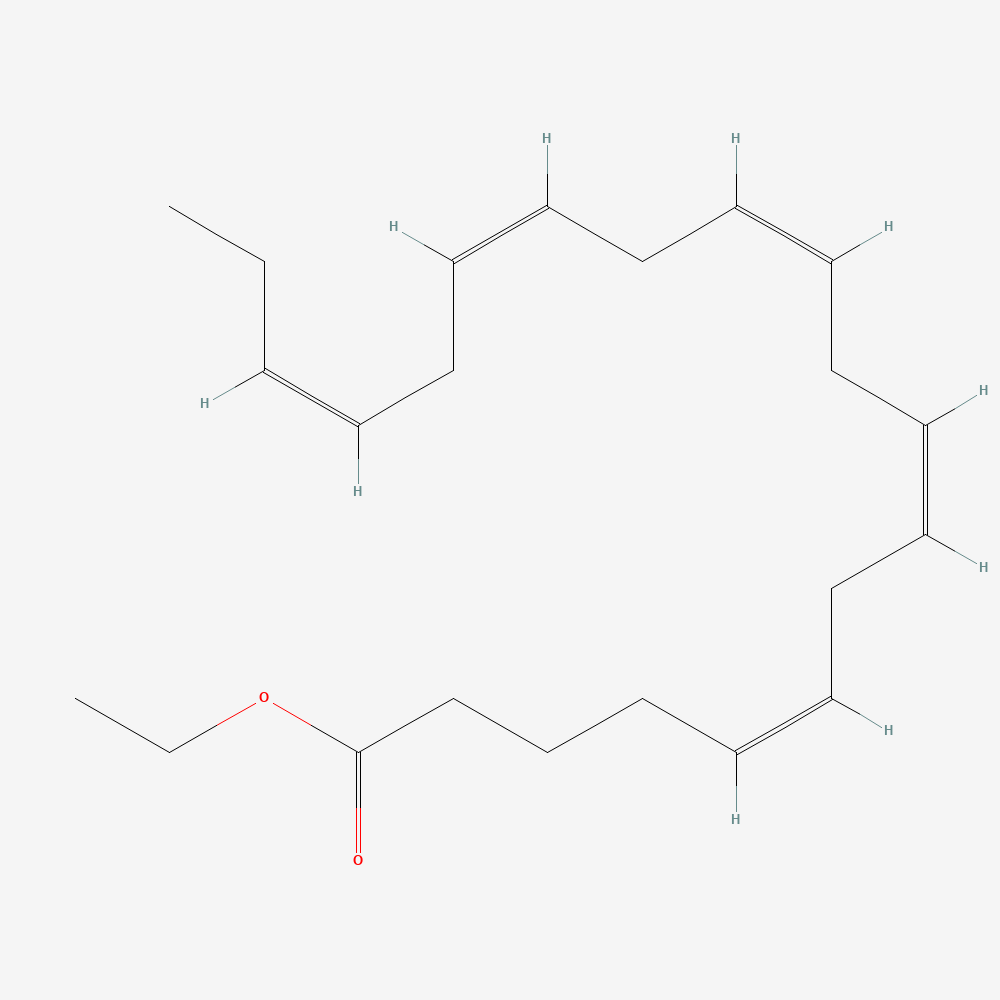
Chemical structure of the ethyl ester of eicosapentaenoic acid (EPA).
Shown: Icosapent ethyl, the EPA ethyl ester.
This is the administered ethyl ester, distinct from free EPA and from DHA. The optional 3D view is a computed PubChem conformer, not an experimentally measured or protein-bound shape.
A next milestone is not summarized for this therapy. This does not mean development has ended.
Development history5 selected milestones
Icosapent ethyl · compound history across indications
Selected sourced milestones, not a complete development history. Dates distinguish study starts, publications, announcements and approvals; the first listed date is not necessarily when development began.
Study start
MARINE begins screening participants
The preapproval MARINE phase 3 trial screened its first participant. It studied AMR101, later marketed as Vascepa, in adults with very high triglycerides; the double-blind treatment period lasted 12 weeks.
The randomized trial in 229 adults with triglycerides of 500–2,000 mg/dL reported substantial triglyceride lowering with purified EPA ethyl ester, without a significant LDL-C increase. It evaluated lipid changes rather than cardiovascular events.
In 8,179 statin-treated patients with elevated triglycerides and cardiovascular disease or diabetes plus risk factors, icosapent ethyl reduced the primary cardiovascular composite (HR 0.75; 95% CI 0.68–0.83). Hospitalization for atrial fibrillation or flutter was more frequent.
Following REDUCE-IT, FDA approved use with maximally tolerated statins to reduce specified cardiovascular events in adults with triglycerides at least 150 mg/dL and established cardiovascular disease, or diabetes plus at least two additional risk factors.