Limitations: 1, 349 is the primary efficacy subgroup of 1, 478 randomized. Safety uses the larger treated cohort. Moderate-TG efficacy is distinct from the approved severe-TG indication.
Status in this atlas: Tryngolza is FDA-approved for FCS and, since June 24, 2026, severe hypertriglyceridemia. This plotted trial concerns moderate triglyceride elevation. Status source
Targets apoC-III messenger RNA to reduce apoC-III protein production.
Uses, doses and availability depend on the formulation, indication and country. Study doses below describe research; they are not prescribing instructions.
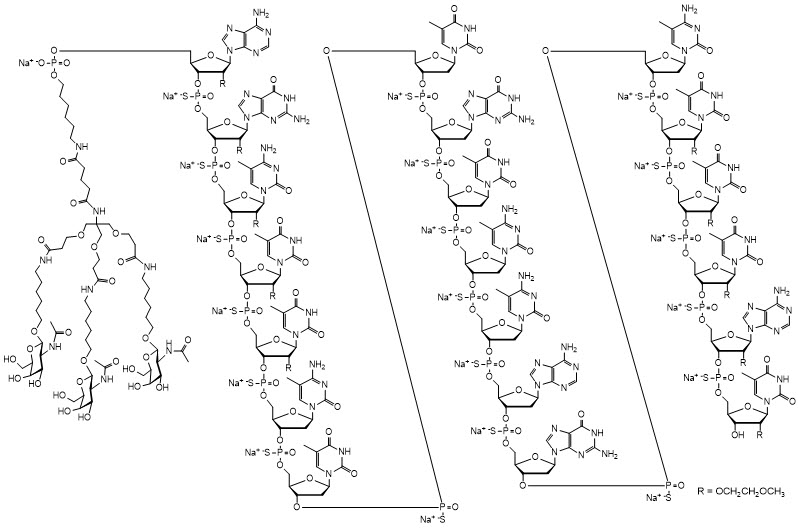
Chemically modified antisense oligonucleotide conjugated to a ligand containing three GalNAc residues.
Shown: Olezarsen sodium as depicted in the prescribing information.
Exact chemical diagram from the label, including the GalNAc ligand. This single-strand antisense drug is distinct from a double-stranded siRNA; no 3D conformation is implied.
A next milestone is not summarized for this therapy. This does not mean development has ended.
Development history4 selected milestones
Olezarsen · compound history across indications
Selected sourced milestones, not a complete development history. Dates distinguish study starts, publications, announcements and approvals; the first listed date is not necessarily when development began.
Publication
Early human APOC3 study published
The phase 1/2a study of AKCEA-APOCIII-LRx, later named olezarsen, reported suppression of apoC-III and reductions in triglycerides and atherogenic lipoproteins in volunteers with elevated triglycerides.
FDA approved Tryngolza for adults with familial chylomicronemia syndrome. This initial rare-disease indication is distinct from the moderate-triglyceride population in the plotted ESSENCE trial.
The plotted phase 3 trial reported substantial triglyceride lowering at six months in patients with moderate hypertriglyceridemia and elevated cardiovascular risk. It did not establish a reduction in cardiovascular events.
Ionis announced FDA approval as an adjunct to diet to reduce triglycerides and acute-pancreatitis risk in adults with severe hypertriglyceridemia, defined as triglycerides of at least 500 mg/dL.