Selected approval record (2017-07): PMDA's approved-drug record lists initial Japanese approval of pemafibrate as Parmodia in July 2017. This is a Japan-specific regulatory milestone, not a U.S. approval or proof of cardiovascular-event reduction.
Median randomized follow-up: 3.4 years. Published primary table reports 3.60 versus 3.51 events per 100 person-years, not cumulative percentages.
Safety context
Renal adverse events and venous thromboembolism were more frequent; overall serious adverse events were similar.
Limitations: Triglyceride lowering did not translate into fewer cardiovascular events. ApoB increased. Published outcome table gives incidence rates per person-year; those are not relabeled as cumulative percentages.
Status in this atlas: Selected approval record (2017-07): PMDA's approved-drug record lists initial Japanese approval of pemafibrate as Parmodia in July 2017. This is a Japan-specific regulatory milestone, not a U.S. approval or proof of cardiovascular-event reduction. Status source
Uses, doses and availability depend on the formulation, indication and country. Study doses below describe research; they are not prescribing instructions.
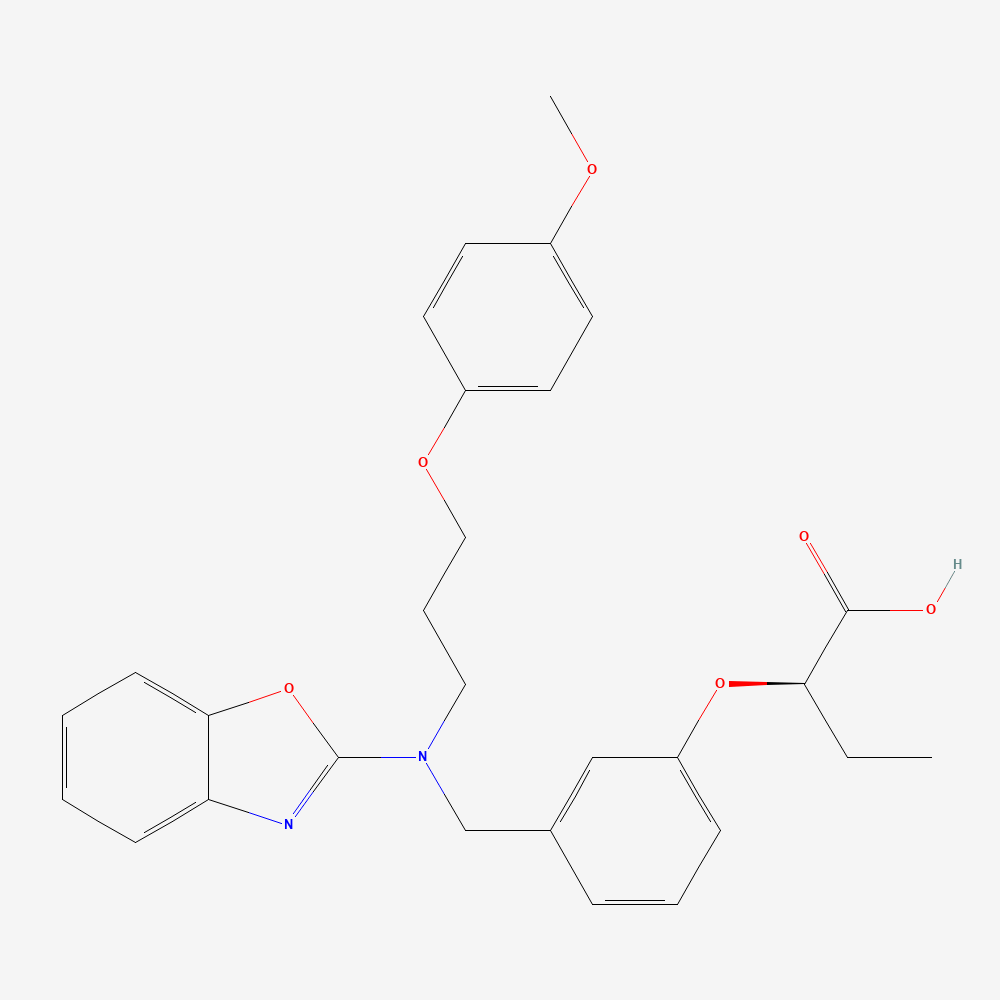
The structure is the stereochemically specified PubChem record for pemafibrate. The optional 3D view is a computed PubChem conformer, not an experimentally measured or protein-bound shape.
A next milestone is not summarized for this therapy. This does not mean development has ended.
Development history4 selected milestones
Pemafibrate · compound history across indications
Selected sourced milestones, not a complete development history. Dates distinguish study starts, publications, announcements and approvals; the first listed date is not necessarily when development began.
Study start
Japanese phase 2 trial begins
The K-877-04 randomized phase 2 trial began at 19 sites in Japan, testing the selective PPAR-alpha modulator against placebo and fenofibrate in patients with high triglycerides and low HDL-C. The study ran through July 2011.
PMDA's approved-drug record lists initial Japanese approval of pemafibrate as Parmodia in July 2017. This is a Japan-specific regulatory milestone, not a U.S. approval or proof of cardiovascular-event reduction.
Kowa announced that the phase 3 cardiovascular outcomes trial would not continue after a planned interim analysis indicated the primary endpoint was unlikely to be met. The announcement concerned the PROMINENT trial.
In 10,497 patients with type 2 diabetes, elevated triglycerides and low HDL-C, pemafibrate lowered triglycerides but did not reduce the primary cardiovascular outcome (HR 1.03; 95% CI 0.91–1.15). Renal adverse events and venous thromboembolism were more frequent.