All therapiesEvidence snapshot 2026-09-14
Lipids & cardiovascular health

Rosuvastatin

Inhibits HMG-CoA reductase, an enzyme in cholesterol synthesis. Source

At a glance

Selected evidence in this atlas
Studied use & population

Adults with hypercholesterolemia

Study context
Approval & development

Selected approval record (2003-08-12): FDA approved rosuvastatin as Crestor for lipid indications.

Status sourceStatus & indications
Selected efficacy evidence

LDL-C: 63% reduction within arm · 6 weeks

Dose-response trial · regulatory-label · 40 mg daily · Adjusted mean change from baseline.

Evidence & limitations
Important safety context

Label risks: muscle injury, liver enzyme elevations and increased glucose; muscle risk is greater at 40 mg.

Safety context
Next milestone

A next milestone is not summarized for this therapy.

Milestone details

Study results apply to their own population, dose and analysis. They do not establish a ranking between therapies.

Evidence in the atlas

1 result

Each result belongs to its own study population, dose and analysis. Open a result for its chart, comparator, safety findings and limitations.

Lipid lowering

Dose-response trial

LDL-C: 63% reduction within arm · 6 weeks

40 mg daily

Adults with hypercholesterolemia

Adjusted mean change from baseline.

Safety context

Label risks: muscle injury, liver enzyme elevations and increased glucose; muscle risk is greater at 40 mg.

Limitations: Small displayed arm. These dose-response data differ from larger trials; do not treat the value as a universal expected response.

Biology & identity

Status in this atlas: Selected approval record (2003-08-12): FDA approved rosuvastatin as Crestor for lipid indications. Status source

Inhibits HMG-CoA reductase, an enzyme in cholesterol synthesis.

Mechanism source

Uses, doses and availability depend on the formulation, indication and country. Study doses below describe research; they are not prescribing instructions.

The molecule

Small molecule

Rosuvastatin

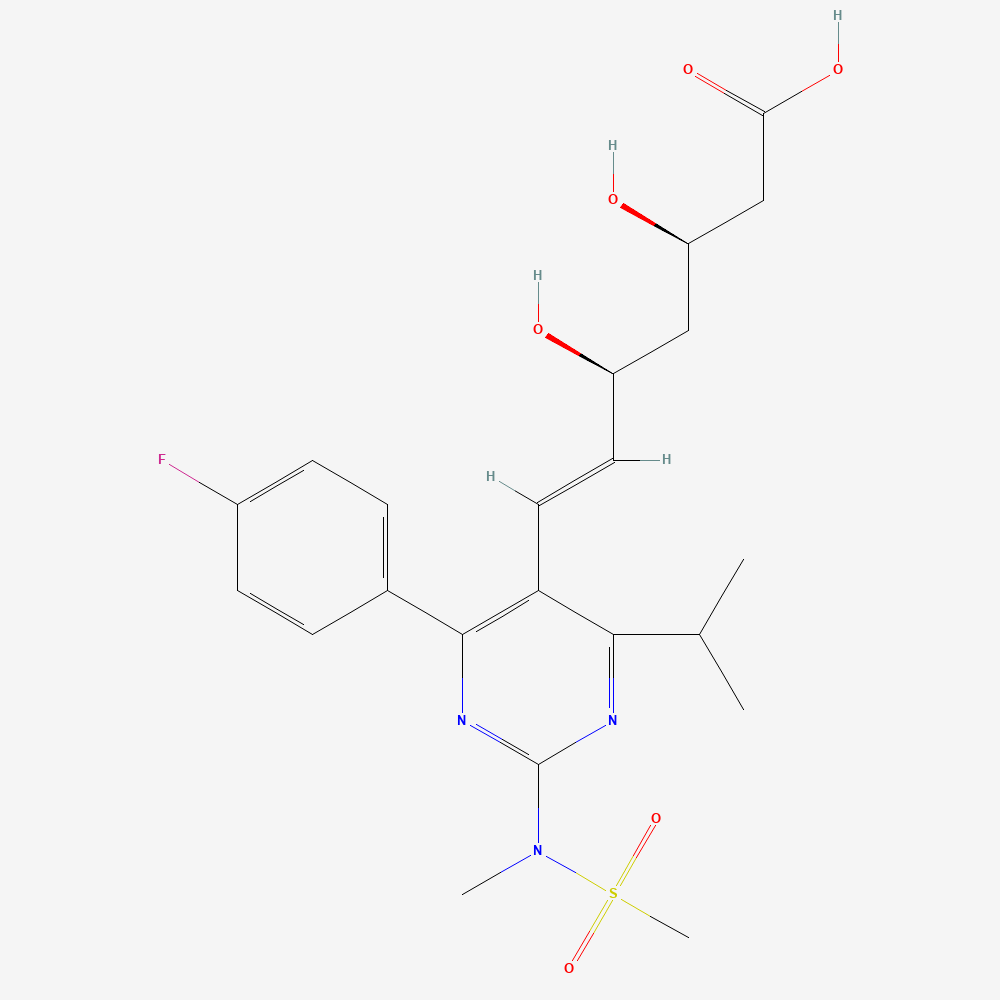
Chemical structure of the rosuvastatin parent molecule.

Shown: Rosuvastatin free acid; calcium counterion omitted.

Crestor contains rosuvastatin calcium. The drawing shows the parent molecule rather than the full salt. The optional 3D view is a computed PubChem conformer, not an experimentally measured or protein-bound shape.

PubChem CID 446157

Development timeline

Next milestone

A next milestone is not summarized for this therapy. This does not mean development has ended.

Development history5 selected milestones

Rosuvastatin · compound history across indications

Selected sourced milestones, not a complete development history. Dates distinguish study starts, publications, announcements and approvals; the first listed date is not necessarily when development began.

  1. Publication

    Phase 2 dose-ranging results published

    An early placebo-controlled program reported dose-dependent LDL-C reductions with investigational rosuvastatin.

    Olsson — rosuvastatin phase 2 results
  2. Publication

    Comparative dose-response trial published

    A six-week randomized trial compared rosuvastatin and atorvastatin across dose ranges, measuring LDL-C, ApoB and other lipid changes.

    Schneck et al. — dose-response study
  3. Approval

    Crestor receives first U.S. approval

    FDA approved rosuvastatin as Crestor for lipid indications.

    FDA — original Crestor approval letter
  4. Publication

    JUPITER prevention results published

    Rosuvastatin reduced vascular events in people without clinical cardiovascular disease who had elevated high-sensitivity C-reactive protein. Physician-reported diabetes was more frequent.
    JUPITER — NEJM
  5. Publication

    HOPE-3 prevention results published

    Rosuvastatin reduced cardiovascular events in an ethnically diverse population at intermediate risk without established cardiovascular disease.

    HOPE-3 — NEJM

Selected sources checked Sep 14, 2026. This is not an exhaustive history.