Major vascular events: RR 0.76 (95% CI 0.72–0.81). First coronary death or nonfatal heart attack, stroke of any type, or coronary/noncoronary revascularization.
HPS · 40 mg orally daily · Usual care; simvastatin versus matching placebo. · Mean randomized follow-up: 5 years.
Major vascular events: RR 0.76 (95% CI 0.72–0.81). First coronary death or nonfatal heart attack, stroke of any type, or coronary/noncoronary revascularization.
40 mg orally daily
Adults aged 40–80 with coronary disease, other occlusive arterial disease, or diabetes.
Background treatment & comparator: Usual care; simvastatin versus matching placebo.
Mean randomized follow-up: 5 years. Crude proportion with an event during randomized follow-up; mean randomized follow-up: 5 years.
Safety context
Annual excess myopathy risk was approximately 0.01%; no significant excess cancer or other nonvascular hospitalization.
Limitations: Historical standard of care. Ratios are published logrank rate ratios, not Cox hazard ratios; no open-label follow-up included.
Uses, doses and availability depend on the formulation, indication and country. Study doses below describe research; they are not prescribing instructions.
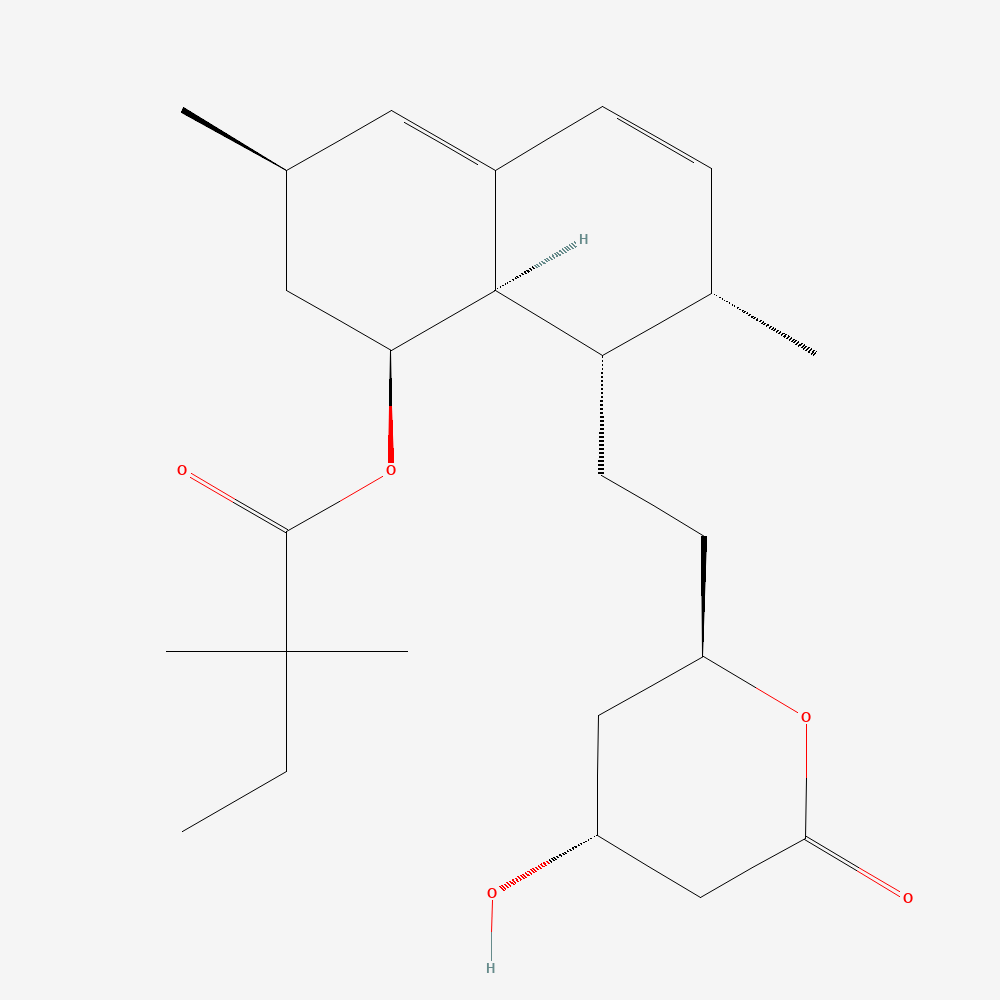
Chemical structure of simvastatin in its administered lactone form.
Shown: Neutral simvastatin lactone prodrug.
This is simvastatin, not its ring-opened active hydroxy-acid metabolite. The optional 3D view is a computed PubChem conformer, not an experimentally measured or protein-bound shape.
A next milestone is not summarized for this therapy. This does not mean development has ended.
Development history4 selected milestones
Simvastatin · compound history across indications
Selected sourced milestones, not a complete development history. Dates distinguish study starts, publications, announcements and approvals; the first listed date is not necessarily when development began.
Publication
Early MK-733 trial published
A four-week placebo-controlled trial tested the compound later named simvastatin in people with hypercholesterolemia.
HPS established clinical benefit in a broad high-risk population, including people with vascular disease or diabetes. The trial results form the simvastatin comparison in this visualization.